

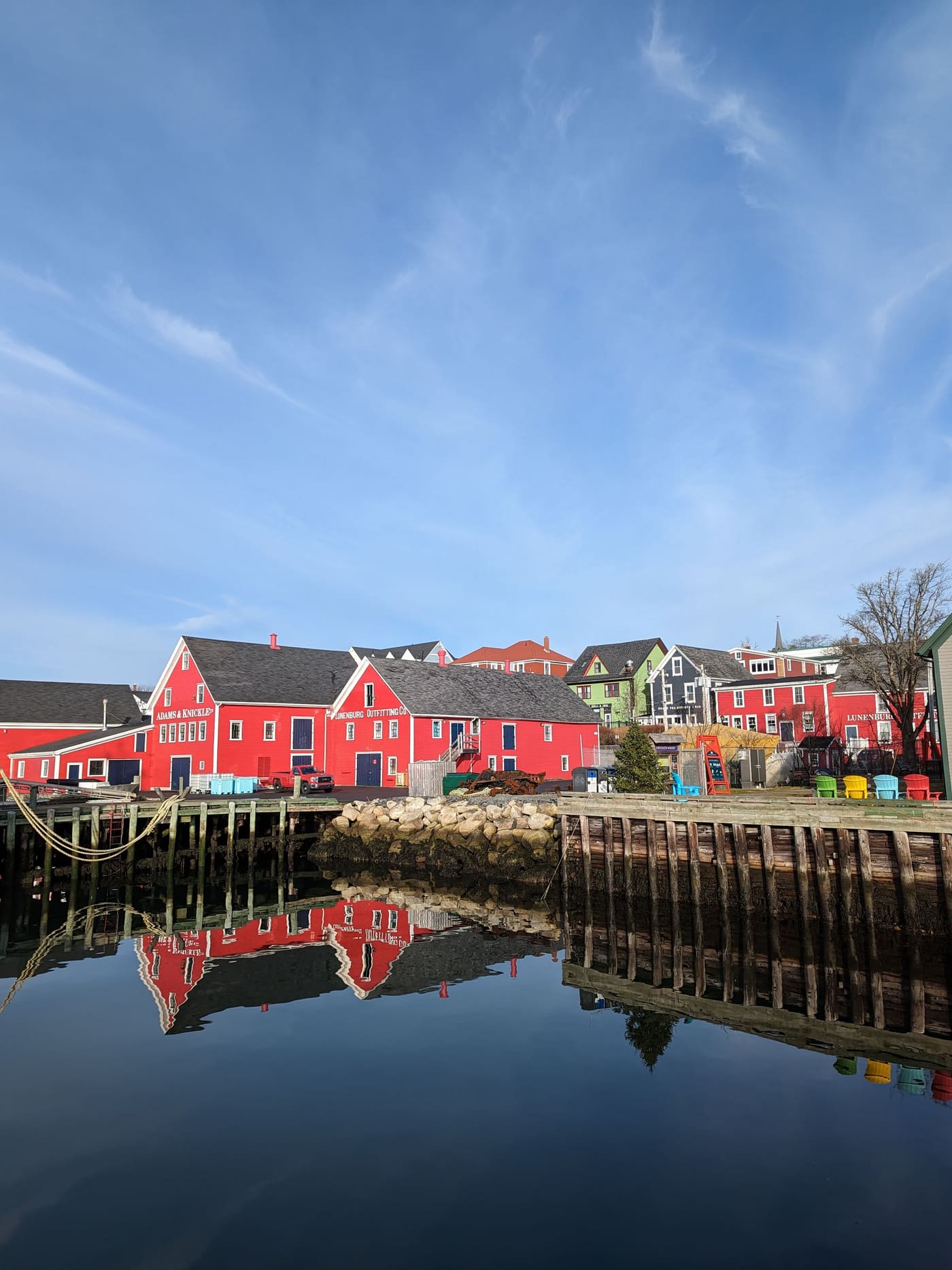
Lunenburg, South Shore
Renovation mortgages: purchase plus improvements in Atlantic Canada
Much of Nova Scotia’s affordable housing is older and needs a roof, windows or a new heating system. This is how to buy it and put the work in the mortgage.
Can I buy a house and finance the renovations in the same mortgage?
Yes. A purchase plus improvements mortgage lends up to 95% of the lending value on a 1–2 unit home you live in: the lesser of the as-improved value and the purchase price (or as-is value) plus the cost of the improvements. You put down 5% of that larger figure, the lender holds the renovation money back, and releases it once the work is confirmed done.
Worked example: $350,000 house, $40,000 of work
| Purchase price | $350,000 |
| Renovation quote | $40,000 |
| Lending value (lesser of $400,000 and $390,000) | $390,000 |
| Down payment, 5% | $19,500 |
| Mortgage before premium | $370,500 |
| Premium, added to the mortgage | $14,820 |
| Held back until the work is done | $40,000, in one advance |
Without the program you would need $17,500 down and $40,000 in cash for the work. With it, you need $19,500 down and a way to carry the contractor until the draw. What else buying costs in Nova Scotia →
Go deeper
The detail, if you want it
How it works, step by step
- Get a written quote before you firm up the offer, with the scope of work and the price.
- The appraiser values the home twice: as it is, and as it will be once the work is done.
- At closing, the lender advances the purchase and holds the improvement amount back with your lawyer.
- The work is done. Completion is confirmed by an inspection, paid invoices or photos, depending on the lender and the size of the job.
- The holdback is released, in one advance or in draws.
Older houses in Nova Scotia, and buying in the other provinces
In Nova Scotia
Older wood-frame homes with knob-and-tube wiring or 60-amp service, oil tanks past their age limit, wood stoves without a WETT certificate, and roofs at the end of their life. Home insurers can refuse a binder on some of these, so the fix may have to be done before or right after closing. Oil tanks, wells and wood heat →
I am a licensed mortgage broker in Nova Scotia, based in Bedford. Sources: CMHC Improvement, Sagen Purchase Plus Improvements, Canada Guaranty Purchase Advantage Plus.
In New Brunswick
A 1% real property transfer tax on the greater of the price and the assessed value — $3,417 on the September 2026 benchmark of $341,700 — with no first-time buyer exemption, and $85 each to register the deed and the mortgage in Land Titles. A lawyer closes.
In Prince Edward Island
A 1% real property transfer tax — $4,099 on the September 2026 average of $409,925 — that a qualifying first-time buyer does not pay, at any price. Registry of Deeds fees are $463.65 each on a deed and a mortgage of $200,000 or more. A lawyer closes.
In Newfoundland and Labrador
No land transfer tax. Registry of Deeds fees instead: $100 plus 40 cents per $100 over $500 on the deed and again on the mortgage, capped at $5,000 — $1,589 for the deed on the September 2026 average of $372,633. A lawyer closes.
How it works
From first call to keys, in four steps
-
A 15-minute call
You say what you’re trying to do and roughly what you earn.
Riley tell you the price a lender will support, the cash you need to close, and what to fix first.
-
Documents and pre-approval
You send the short list through a secure upload link.
Riley package the file and come back with a pre-approval letter and a rate held 90 to 120 days.
-
Lenders, side by side
You read the comparison and pick.
Riley place one application with banks, credit unions and monolines, and show you every answer.
-
Approval, lawyer, keys
You sign with your own local lawyer.
Riley hold the lender, appraiser and lawyer to the closing date.
Why a broker
Licensed, independent, paid by the lender
- Licensed across Atlantic Canada Indi Mortgage operates in all four Atlantic provinces; Riley Oickle, Associate Mortgage Broker, NS 3001134
- $0 broker fee On a standard residential mortgage the lender pays, not you
- 33 lenders, one application Banks, credit unions, monolines; one credit check
Questions people ask
Can I add renovation costs to my mortgage when I buy?
Yes, on an insured purchase. CMHC, Sagen and Canada Guaranty each insure purchase-plus-improvements mortgages up to 95% of the lending value on a 1–2 unit home you live in, and 90% on 3–4 units with one owner-occupied. The lending value is the lesser of the as-improved value and the purchase price (or as-is value) plus the cost of the improvements.
When do I get the renovation money?
After the work is done, not at closing. The lender holds the improvement amount back and releases it once completion is confirmed by an inspection, paid invoices or photos. When the work is more than 10% of the as-improved value, it is usually paid in progress draws; CMHC and Sagen pay for up to 4 advance inspections.
What improvements qualify?
Permanent work to the property: kitchens, bathrooms, roofs, windows, heating, basements, accessibility. Not furniture, appliances, electronics and other moveable property. The lender wants a written quote before closing and the appraiser values the home as it will be once the work is done.
How do I pay the contractor before the holdback is released?
The usual answer is a contractor who will wait for the draw, your own savings, or a short-term line of credit, repaid when the lender releases the funds. Agree this with the contractor before you firm up the purchase.

Still unsure? Ask me directly.
If your question isn't here, your situation is probably specific. Fifteen minutes on the phone beats reading another page, and nothing is pulled on your credit.
(902) 298-0218 · 8:00 am to 10:00 pm Atlantic, every day
Found a house that needs work?
Send the listing and the contractor’s quote. You get back the lending value, the down payment and how the holdback would be released, within a business day.
(902) 298-0218 · 8:00 am to 10:00 pm Atlantic, every day